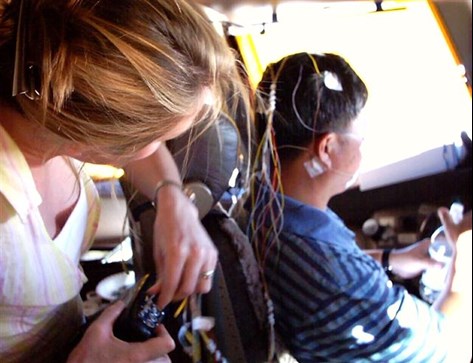
Singapore Airlines was the first airline to introduce ultra-long range (ULR) flights, flights longer than 16 hours in duration, between Singapore (SIN) and Los Angeles (LAX). These ULR flights present a challenge for airlines and regulators, as they can potentially increase fatigue-related operational risk, particularly during the later stages of the flight, if they lead to restricted sleep and extended periods of wakefulness. Providing crewmembers with scheduled in-flight rest breaks for sleep in crew rest facilities is the main fatigue mitigation strategy in ULR operations. To assess the effectiveness of this strategy, in-flight sleep of 41 flight crew (with 6 crewmembers participating on two occasions) was recorded with polysomnography (PSG) and crewmembers completed a 10-min psychomotor vigilance task (PVT) at key times during each flight. Sleep patterns were also monitored with actigraphy and sleep diaries, from 3 days pre-trip, throughout the out and back trip which included a 2 or 3-day layover, and for 3 days post trip.